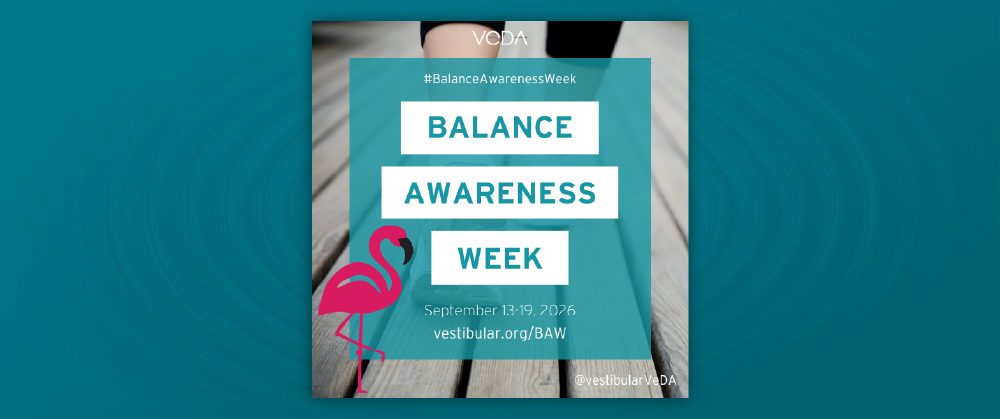
ASHA’s audiologists play an essential role in helping people with dizziness, balance, and other vestibular concerns. Balance Awareness Week is an opportunity to increase understanding of conditions that may be difficult to see and describe—and to make vestibular disorders visible.
To honor Balance Awareness Week, ASHA Journals is highlighting resources that can support your work in screening, diagnosis, and care planning for vestibular disorders. The articles featured below present evidence and clinical perspectives that you can use in your practice. Read on to learn more!
Balance Issues and Other Conditions
Vestibular Dysfunction and Postural Changes in Children With Congenital Cytomegalovirus: A Systematic Review: Congenital cytomegalovirus (cCMV) is the most common congenital infection in the world, and children with cCMV have an increased risk of vestibular and postural balance issues. This study underscores the importance of pediatric vestibular screening for these children.
Psychosocial Status and Quality of Life in Patients With Ménière’s Disease and Vestibular Migraine: Ménière’s disease and vestibular migraine can result in more than dizziness and vertigo—they can also lead to anxiety, depression, and quality-of-life issues. By including psychiatric support in treatment, we can help individuals better manage this condition.
Screening and Diagnosis
Normative Data for the Sensory Organization Test Protocol in a Regional Sample of Healthy Female and Male Adults: Better understanding balance and postural control for people without balance impairment can help you determine when balance screenings are most helpful. These results suggest that adult men are more affected by age-related vestibular decline than are adult women and should be screened for balance issues earlier than women.
Using Artificial Intelligence to Optimize Diagnosis and Management of Vestibular Disorders: A Narrative Review: As artificial intelligence (AI) becomes more readily available, you may be looking for ways to use it in your daily work. Here, researchers show that AI can help clinicians improve diagnostic accuracy and develop more personalized management plans for the people they work with.
Balance, Vision, and Hearing
Effects of Long-Term Contact Lens Use on Vestibulo-Ocular Reflex Using Rotary Chair and Video Head Impulse Testing: Impairment of an individual’s vestibulo-ocular reflex (VOR) can result in dizziness, imbalance, and increased fall risks. Researchers studied VOR in people who wore contact lenses long term, finding that contacts do not significantly affect VOR.
Evaluation of the Effects of Caloric Vestibular Stimulations on Distortion Product Otoacoustic Emission Responses: We have a good understanding of how the auditory system affects balance, but there is less clear evidence that the effect is reciprocal. These findings support the idea of a bidirectional relationship between the vestibular and auditory systems.
Making Vestibular Disorders Visible
You can find all of the articles above—and many more evidence-based resources—on our Balance and Balance Disorders Topic Page. Explore previous coverage of Balance Awareness Week below to find clinical research on vestibular and balance disorders published in the last few years.
We recognize the expertise that audiologists bring to these individuals and are committed to helping you access resources that support patient-centered vestibular care. We hope you’ll join us and the entire vestibular community in working to make balance disorders visible—especially today and the next few days, as we recognize Balance Awareness Week!
Previous Coverage of Balance Awareness Week
Celebrate Balance Awareness Week With Learning and Advocacy (2025)