

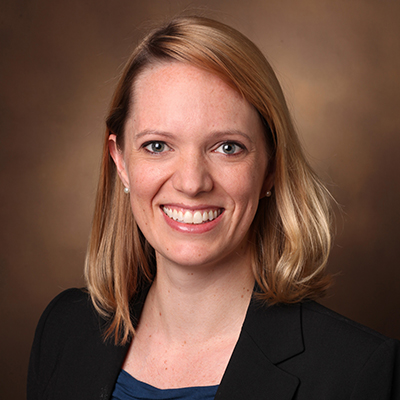
Erin Picou, AuD, PhD, CCC-A
Professor, Vanderbilt University Medical Center
Volunteers are an essential part of ASHA’s Academic and Research Mentoring (ARM) Network programs. This month, we’re highlighting Dr. Erin Picou. She has participated as both a mentor and a reviewer for ARM Network programs, which she learned about as a recent graduate. Dr. Picou reflects on how mentoring shaped her professional growth and the importance of ASHA infrastructure in supporting both protégés and mentors.
How has participation supported your career growth?
Even when my role was formally to be a “mentor,” I feel I learned something from each of my mentees. They all come to these programs with interesting backgrounds different from my own, and I enjoy the opportunity to learn about their perspectives, their science, and their experiences. Learning more about my mentees has allowed me to better understand the challenges associated with being an early-stage academic in the field. In turn, I feel I can better help other students.
What surprised you most about the experience?
I knew that the ARM network and ASHA would develop programs that were person-centered and helpful, so that wasn’t surprising. I was surprised initially at the high level of technical support for each of the programs. All of the programs have online communities, well-developed and thoughtful resources, and ways to connect mentors/mentees virtually.
What inspires you to continue volunteering?
I love meeting new people and making new connections. Also, I know that the ARM Network programs are invaluable for the field. I have seen the benefits in my own career and in the development of students and early-career professionals. I like to do whatever I can to support the programs.
The support from ASHA and the ARM Network for being involved in the programs is amazing. They clear the logistic and technologic hurdles, allowing mentors to focus on mentoring.
What advice would you give to someone considering participating in the ARM Network?
There are so many different types of mentoring opportunities through ARM! I recommend volunteering for one that fits your current job responsibilities. For example, if travel is not in your plan, then consider the Mentoring Academic-Research Careers (MARC) program, which focuses on online connections. If you want a short, focused experience, consider the Promoting the Next Generation of Researchers (PROGENY) program, which focuses on mentoring during the ASHA Convention.
ARM Network Participation
Dr. Picou has been involved in several ARM Network programs. Early in her career, Erin benefited from the Lessons for Success (LfS) program as a protégé. She has since given back to the ARM Network community by serving as a mentor in Promoting the Next Generation of Researchers (PROGENY), Mentoring Academic‑Research Careers (MARC), Pathways, and the Article Peer‑Reviewer Training (APT) program. In addition to her mentoring roles, Dr. Picou also contributes to the Pathways program as an application reviewer.
Erin’s story reflects the spirit of the ARM Network. Her journey demonstrates how much mentors can learn from their mentees—and how strong program support can strengthen the academic and research community.